

Mosquito Sensory Biology Research: Understanding How Repellents Protect Against Mosquitoes
Explore the Potter Lab’s research on mosquito repellent mechanisms. We study how repellents interact with the mosquito olfactory system using calcium imaging, neurogenetics, and novel behavioral assays across Anopheles, Aedes, and Culex mosquitoes.
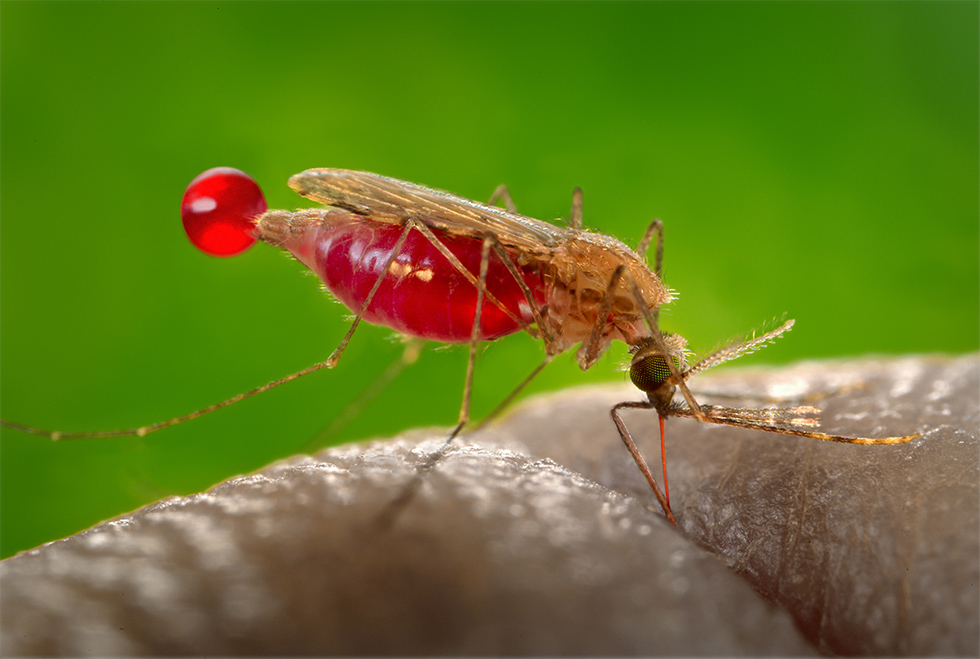
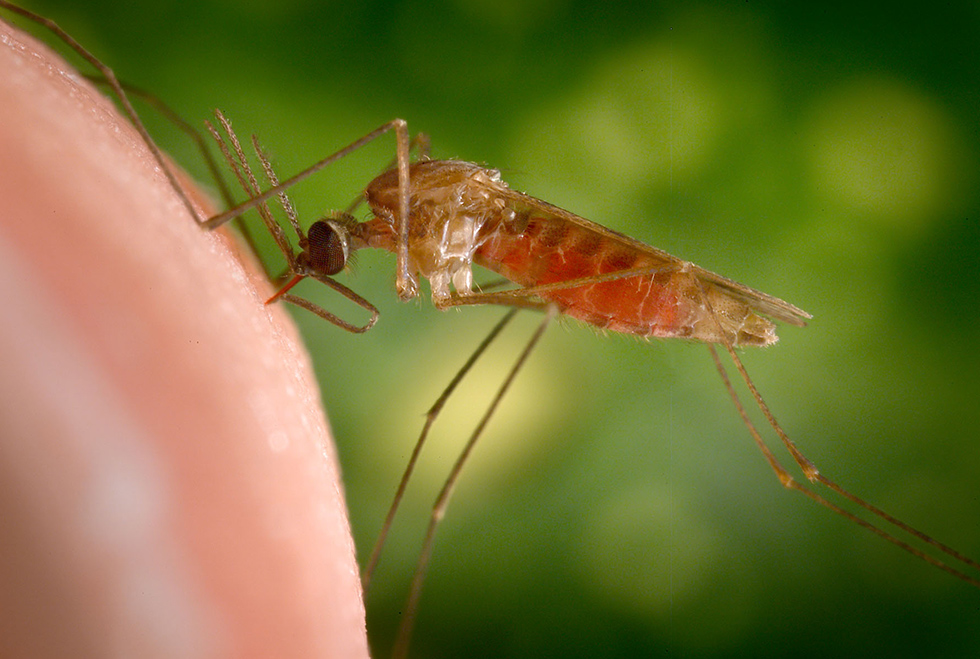
The Potter Lab investigates the neuroscience of mosquito repellents: how they work, why they sometimes fail, and how to build better ones. We study this primarily in Anopheles (malaria), but also in Aedes (dengue, Zika), and Culex (West Nile) for comparison—using a combination of neurogenetic tools, calcium imaging of olfactory neurons, and innovative behavioral assays.
Four Categories of Mosquito Repellents
Our lab’s work emphasizes a classification framework for mosquito repellents based on their mode of action (Meier, Nguyen & Potter, 2025, Trends in Parasitology). Rather than treating all repellents as interchangeable, we identify four distinct categories:
Spatial Repellents: Volatile compounds that activate olfactory sensory neurons (OSNs) in the mosquito’s antennae and maxillary palps, causing the mosquito to actively avoid the treated area from a distance. Examples: lemongrass oil, PMD.
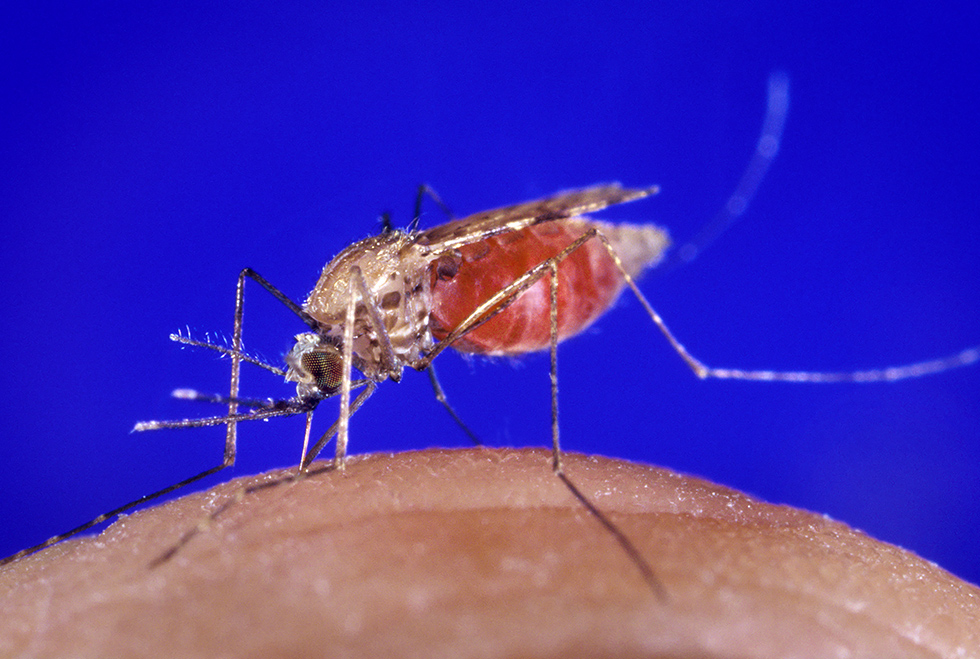
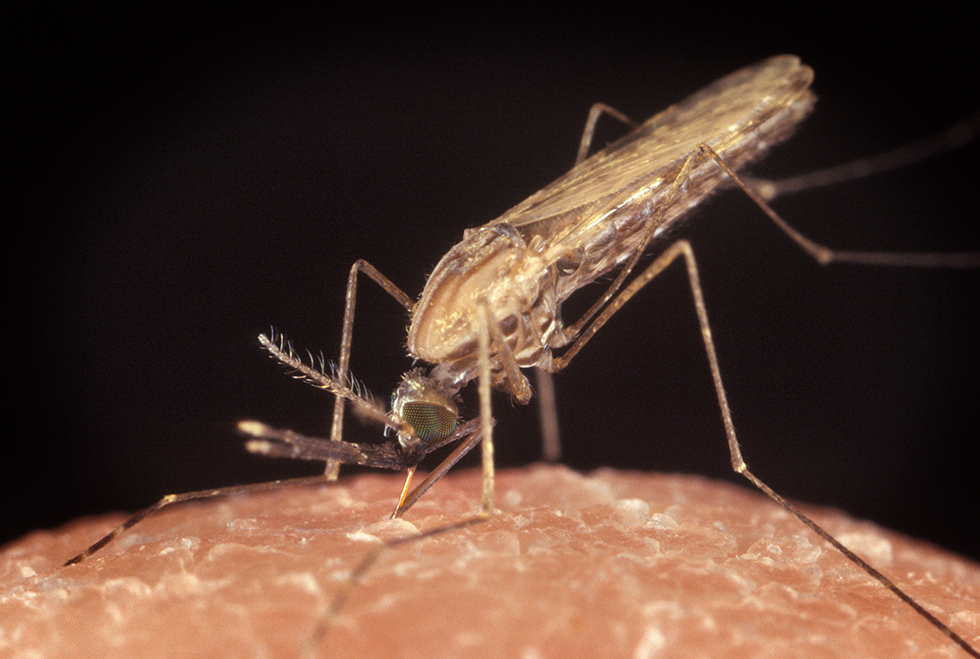
Contact Repellents: Compounds detected by gustatory receptor neurons (GRNs) on the mosquito’s tarsi (feet) and labellum when the mosquito lands on treated skin. The mosquito takes off without biting. Examples: DEET, IR3535, picaridin.
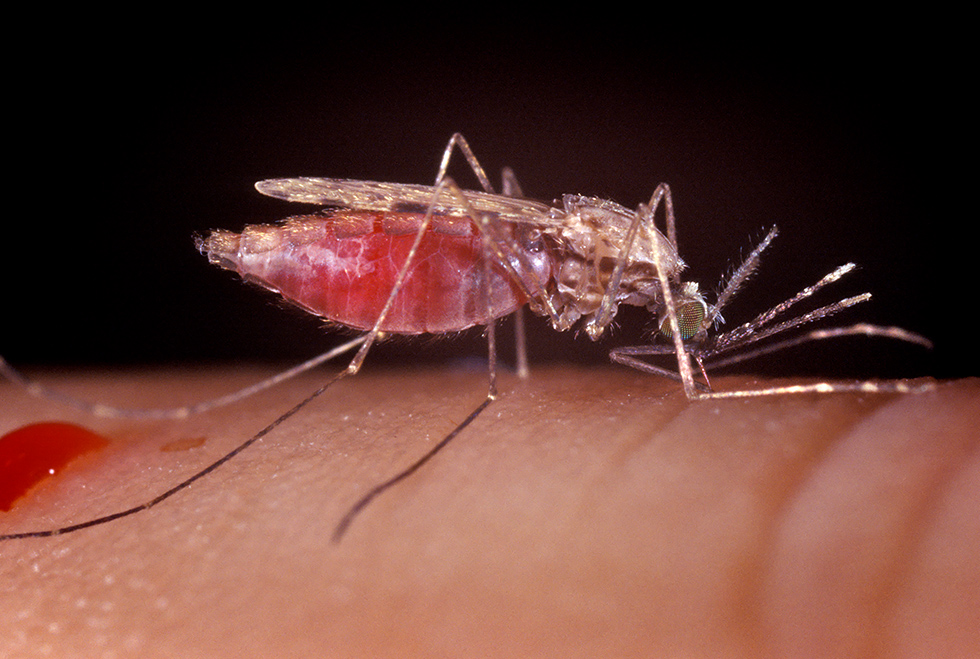
Taste Repellents: Compounds detected by GRNs on the labella and labrum during the probing phase, causing the mosquito to withdraw before completing a blood meal. These act at the latest stage of host-seeking.
Masking Repellents: Compounds that reduce the volatility of human skin odorants through chemical interaction, effectively hiding the host from olfactory detection. Examples: DEET, IR3535, picaridin. See Afify 2019, 2020 for more details.
The Mosquito Olfactory System
Understanding how repellents work requires understanding the mosquito’s sense of smell. Female Anopheles mosquitoes possess approximately 1,250 olfactory sensory neurons housed in roughly 600 sensilla on each antenna, along with approximately 200 olfactory neurons in the maxillary palps (~45 sensilla) and 45 neurons in the labella (Konopka et al, 2023). These neurons express olfactory receptors, including the co-receptor Orco, which is required for the function of most odorant receptors.
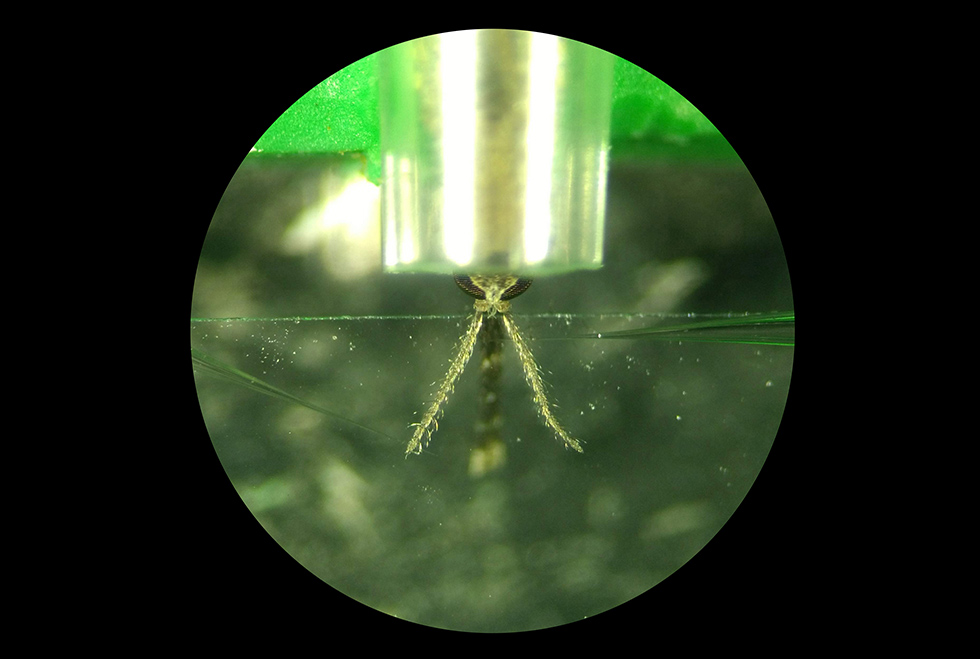
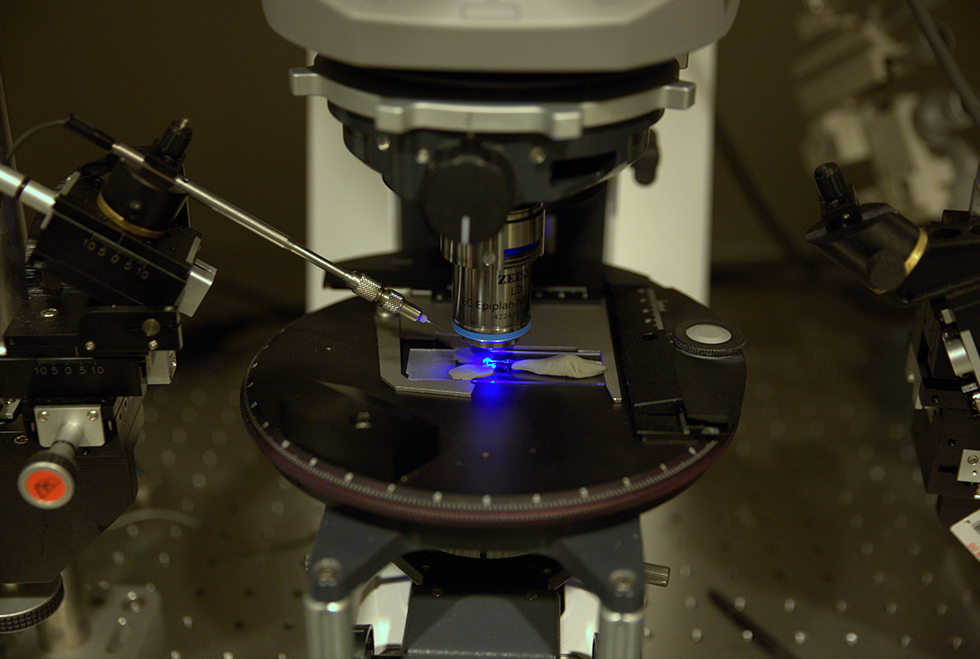
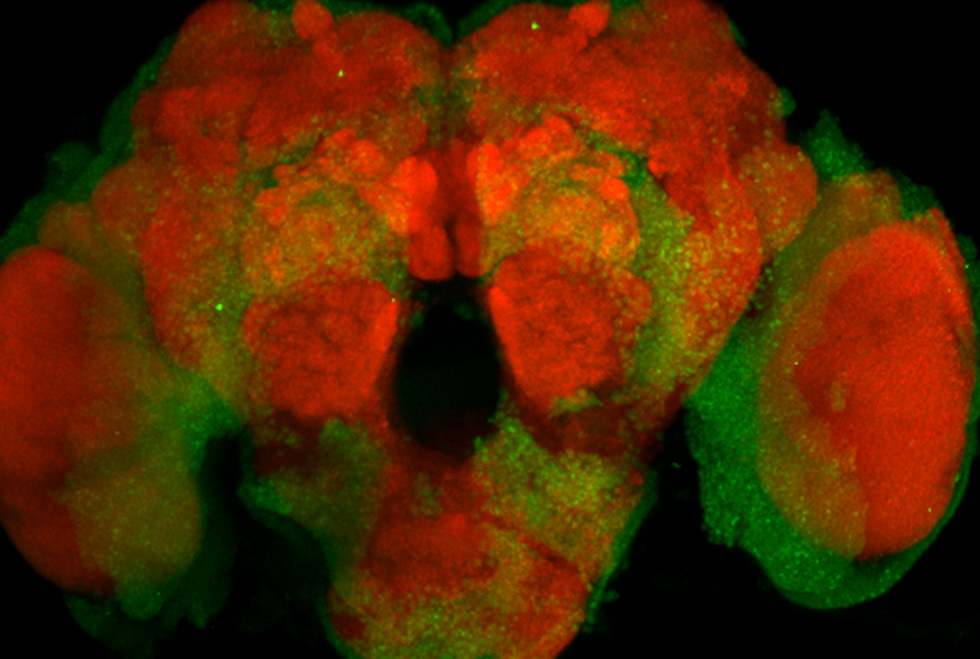
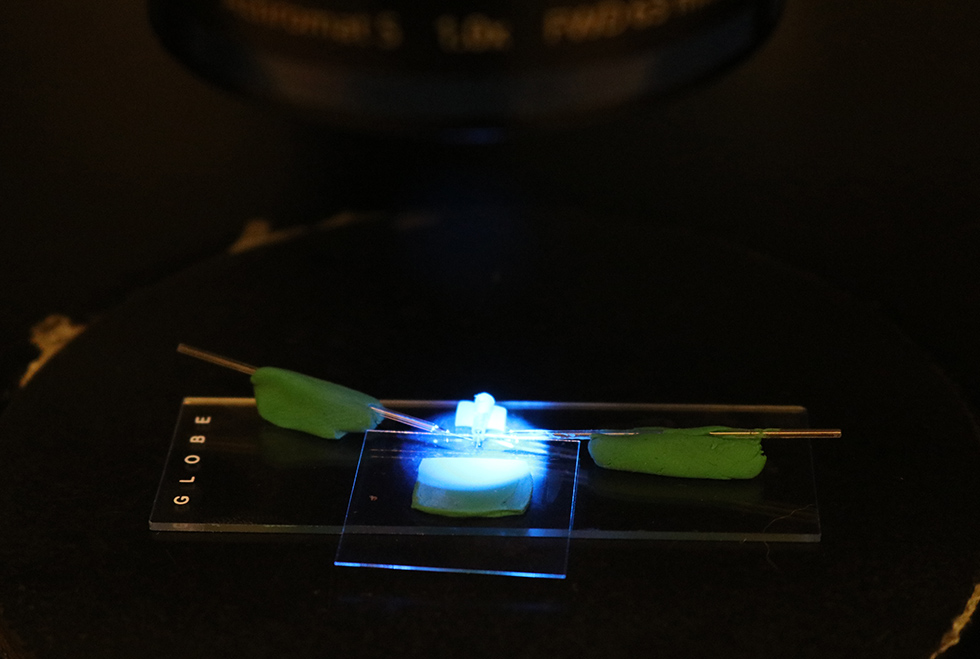
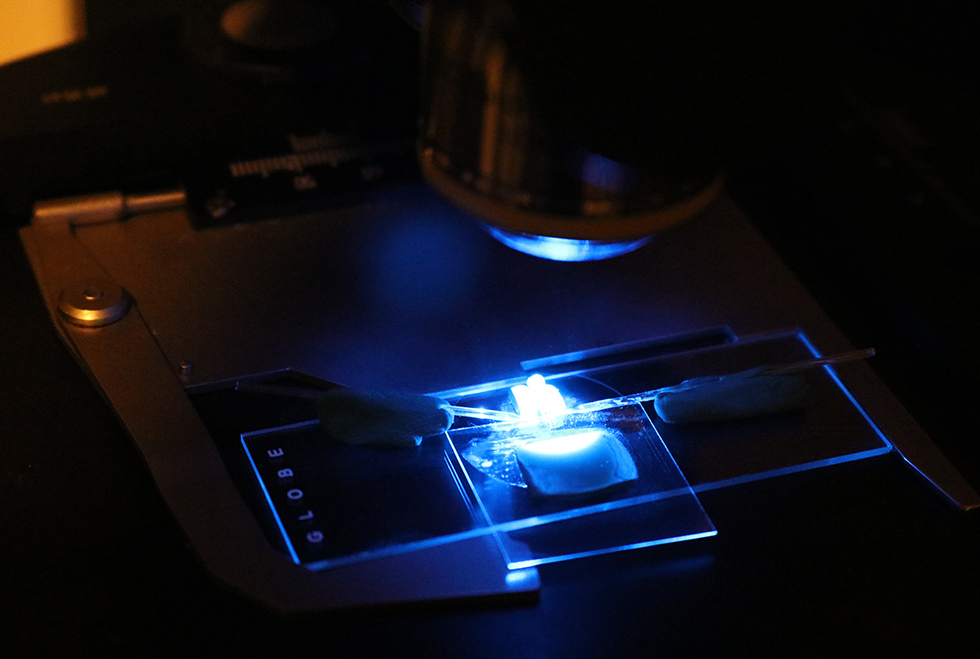
Our lab has developed the first transgenic tools to visualize and genetically target Orco-expressing olfactory neurons across all tissues in Anopheles mosquitoes (using the Q-system: AgORCO-QF2, QUAS-CD8:GFP lines) (Riabinina et al, 2016). These tools enabled us to see, for the first time, the neurogenetic labeling of the mosquito olfactory system and to directly observe how individual neurons responded to repellent compounds using calcium imaging (Afify, 2019, 2020, 2022).
The “Super Repellent” Project
Building on these insights, the Potter Lab is now pursuing the development of next-generation “super repellent” formulations specifically optimized for Anopheles mosquitoes. Our approach has three goals: (1) Identify the individual odors most repellent to Anopheles olfactory neurons; (2) Determine the molecular mechanisms by mapping which odor receptors mediate repulsion; and (3) Generate field-ready formulations using optimal single odorants or synergistic mixtures.
A sampling of the type of research going on in the lab is provided in Genetic Tools for Mosquito Biology and Spatial Repellents.
Our Genetic Advancements:
The Q-system of binary expression and QF2 (Potter, 2010; Riabinina, 2015)
Olfactogenetics (Chin, 2014)
Easy conversion of transgenes via CRISPR/Cas9-based HACKing (Lin, 2016)
Other projects include:
-
Defining the Rules of Olfactory Repulsion: Linking Neuron Activities to Behaviors (Meier, Nguyen)
-
Understanding Natural Biting Behaviors in Mosquitoes: Key to Developing Sensory Interventions (Konopka)
-
Improving CRISPR/Cas9 knock-in Methods: A Roadmap for Genetic Access in Non-Model Organisms (Potter Lab effort)
-
Identify Odorant Receptors Responding to Natural Repellents: Shortcut to New Repellents (Meier, Nguyen)